Breaking NewsThe #DataViz Headline Challenge Starts Friday! Showcase your statistical literacy and journalism skills by submitting your clear and compelling headlines for New York Times graphs in March’s four weekly challenges. The 2022 spring contest will run from March 4 – 30. Finalists will be published on the This is Statistics website each week in partnership with the New York Times Learning Network, and top winners will get prizes. Head over to the #DataViz Headlines Challenge webpage to learn more! |
|
Amplifying Statistics and Data Science in Classrooms |
For those wanting to learn more about statistics and data science, Hollylynne Lee’s Amplifying Statistics and Data Science in Classrooms is a new set of free modules created in The PLACE that help educators:
|

This citizen science project aims to collect data about which birds and how many are in your backyard. This is done once a year during a particular window of time, usually for one week starting at the end of June, and the results contribute to New Zealand’s knowledge and monitoring of garden bird species and the health of the environment we live in.
Get involved! Visit The Science Learning Hub with ready-made resources.
Watch this short talk with your class about how data science skills are a superpower.
Thank you for helping make today our biggest CensusAtSchool launch ever!
1,871 teachers registered
1,010 schools registered
1,877 students took part today
We look forward to a big day tomorrow. The survey remains open until the end of 2022.
We are proud to announce our new live dashboard. See if your school is one of the highest participating schools and fun stats coming in as students take part!
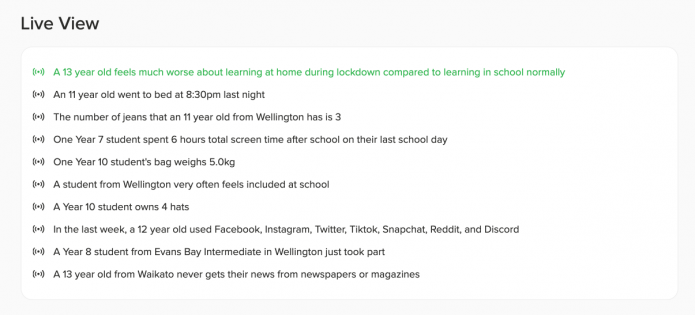
Need help exploring data using technology in your teaching and learning?
Catch up on the latest professional development for Data Science. These webinars are a great starting point to help structure and support STEM opportunities for your colleagues and students.
Data Science Education Meetups
Recommend starting with: What Kinds of Questions Do Students Generate as They View Data Visualizations?
“Thinking about questions makes me think of more questions.”

For a general audience (with an interest in Statistics and/or Computing)
Register for (free) in-person attendance
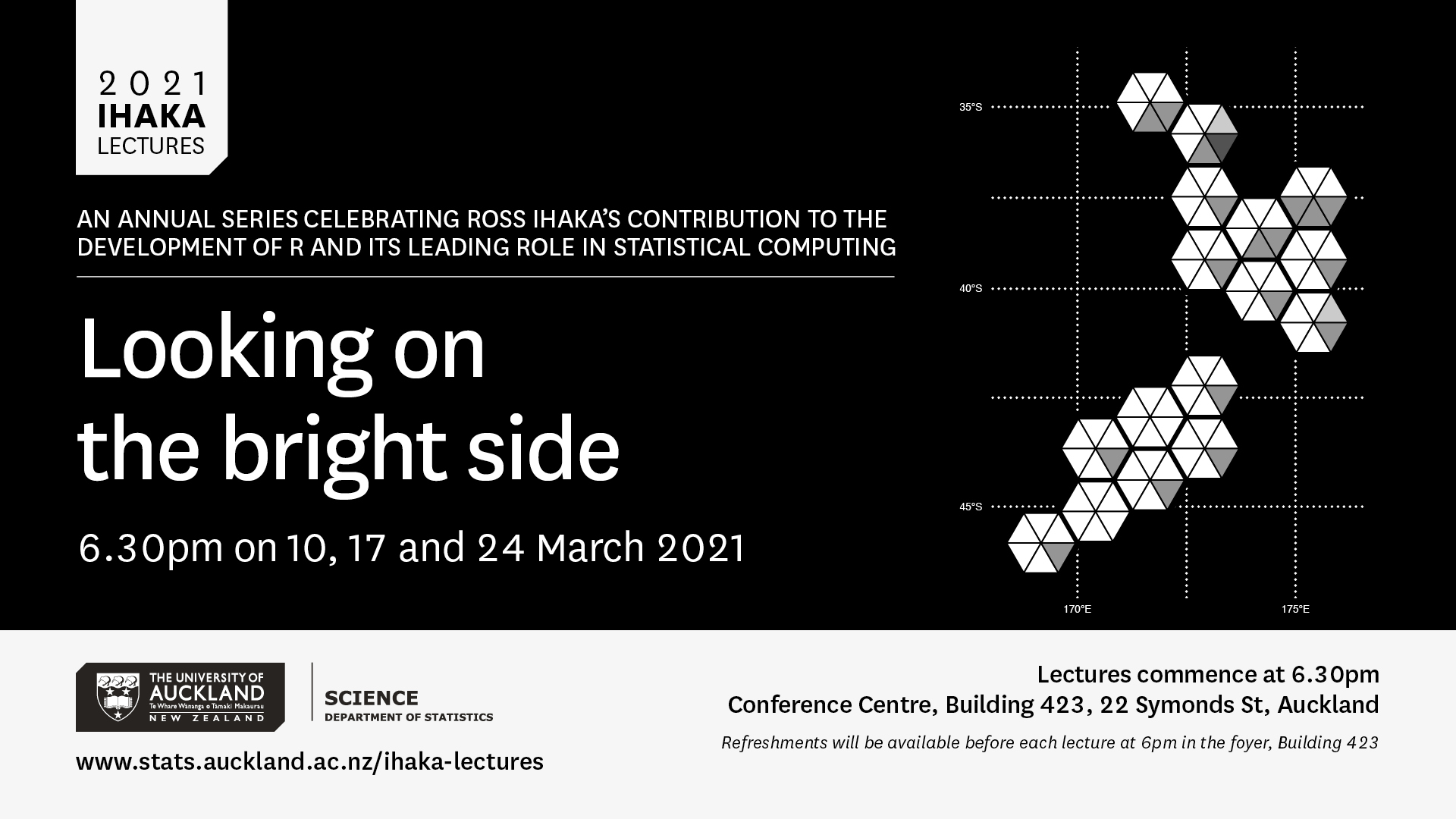
10 March at 6:30pm
Data Science in the Connected Era
Dr Simon Urbanek, Senior Lecturer, Department of Statistics, University of Auckland
17 March at 6:30pm
Implementing a Machine-Learning Tool to Support High-Stakes Decisions in Child Welfare: A case study in Human Centred AI
Professor Rhema Vaithianathan, Centre for Social Data Analytics, AUT
24 March at 6:30pm
Modelling to support the COVID-19 response in Aotearoa New Zealand
Dr Rachelle Binny, Manaaki Whenua-Landcare Research and Te Pūnaha Matatini
|
||||||||||||||||
|
||||||||||||||||
|



Last week the University of California sent a momentous email to 20,000 high schools announcing that they would now accept data science as an alternative to algebra 2 – this has huge implications for schools & students. Read the full announcement